Pam Virada and Daniel Gustav Cramer
Floating with Pam Virada and Daniel Gustav Cramer
A few weeks ago, we were in the south of Thailand and happened upon a long jetty on the Andaman Sea. Our three-year-old son loves fishing and never misses a chance to get ‘in the mix’ with the fishermen. He oohs and aahs at their catch — little flashes of light in buckets — while cigarette smoke hangs in the air, along with the smell of bait rising from the wooden floorboards. This makes sense; this feels right.
In Profanations (2005), Giorgio Agamben writes about the interaction between the profane and the sacred. The profane is the horizontal plane; the sacred is the vertical. It is in their merging that something transcendental can happen. It’s not because of the ‘purity’ of either, but rather the power they have when they mix. When the importance of the horizontal and vertical interacting in exhibition-making became apparent, it started to appear everywhere.
We stay and watch. The fisherman pulls a green net out of the horizontal sea; upon taking it out, he hangs it from the rafters of the awning on the jetty — the net becomes vertical. He then pulls out small fish, each one as big as his finger. The fish are all horizontal in the net, as if they are still swimming in their horizontal world. Pull, bucket. Pull, bucket. Shimmering in the light, shimmering in the bucket, shimmering in our son’s memory.
As Agamben said, “profane is the world in which we can freely play with things as they are.”
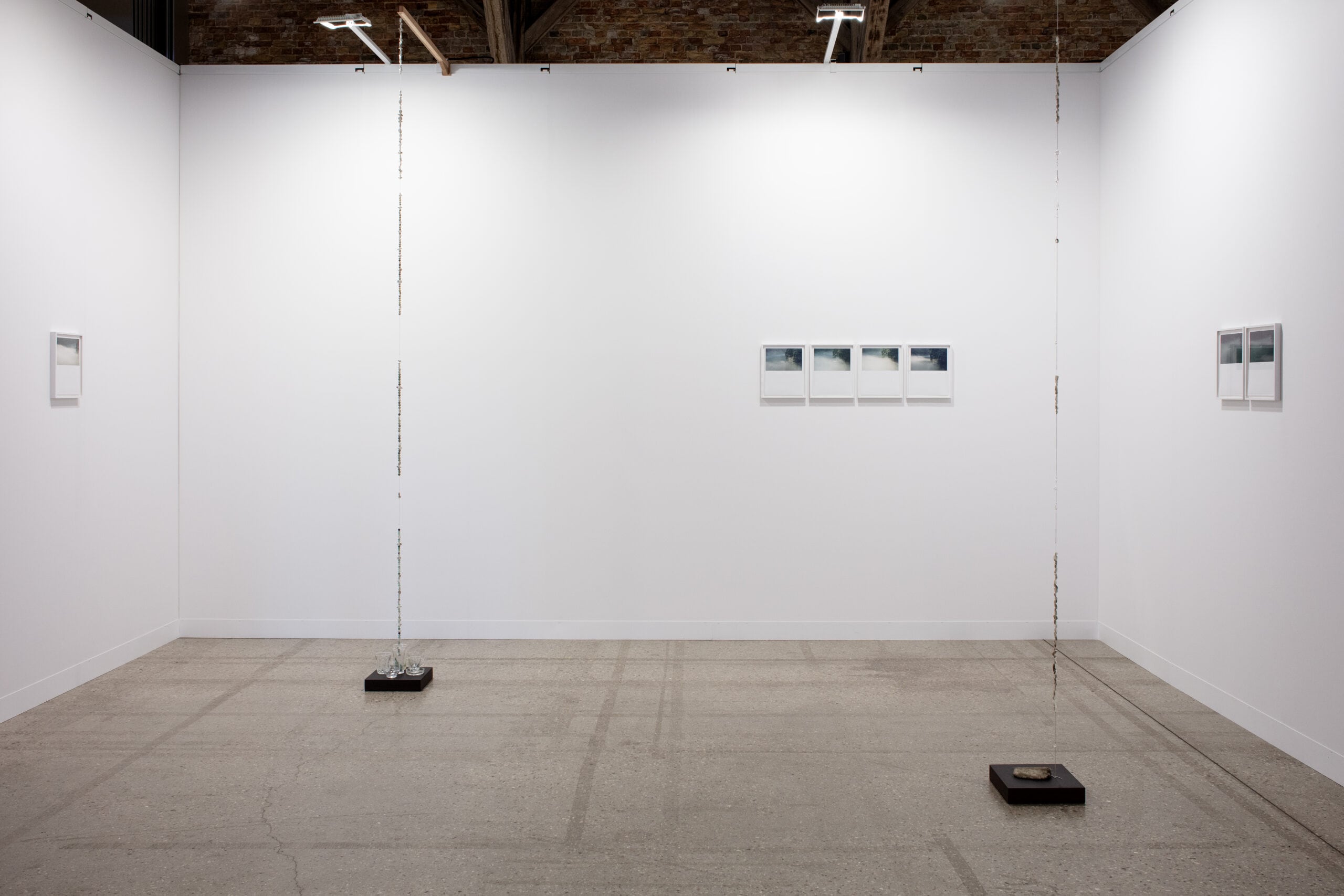
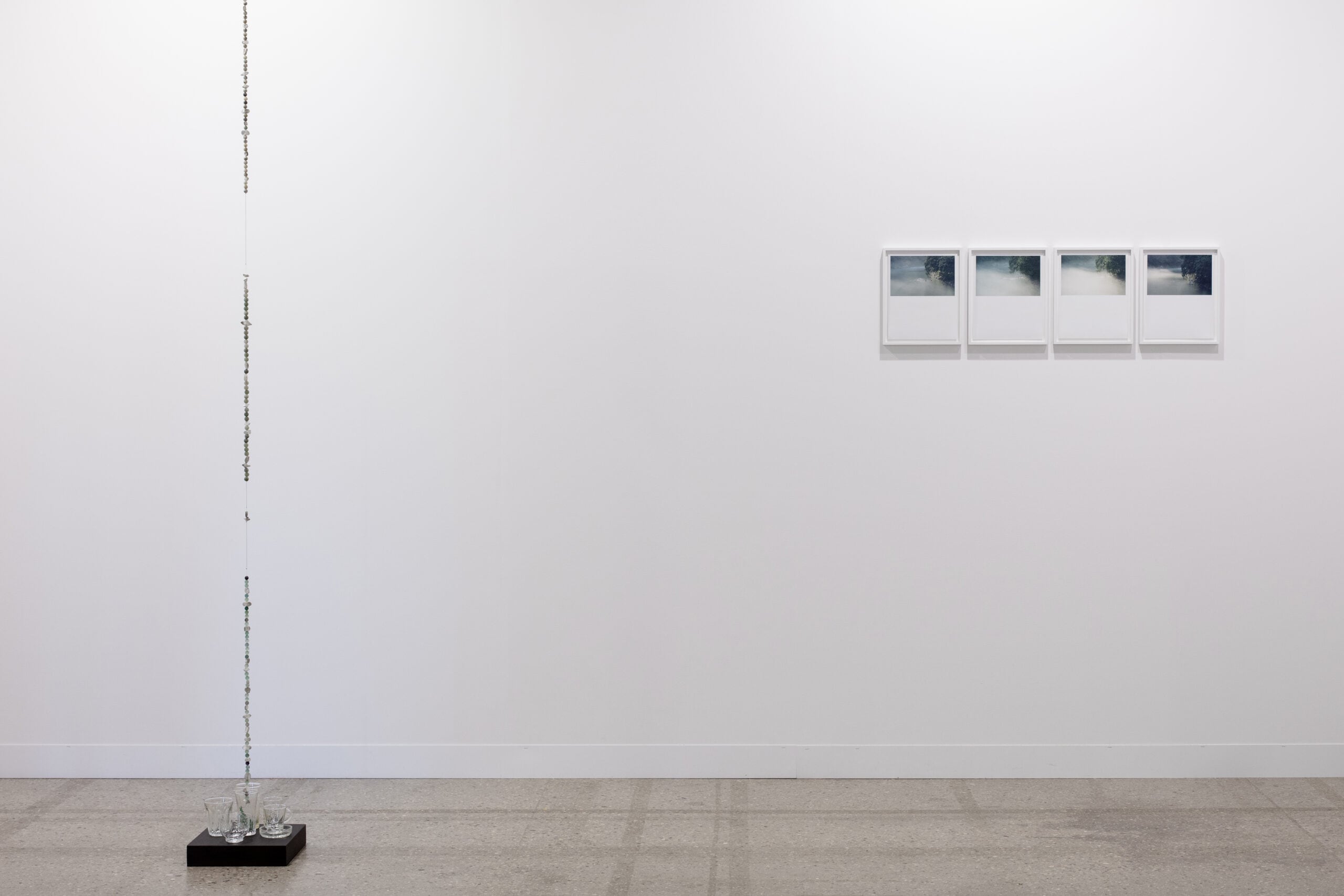
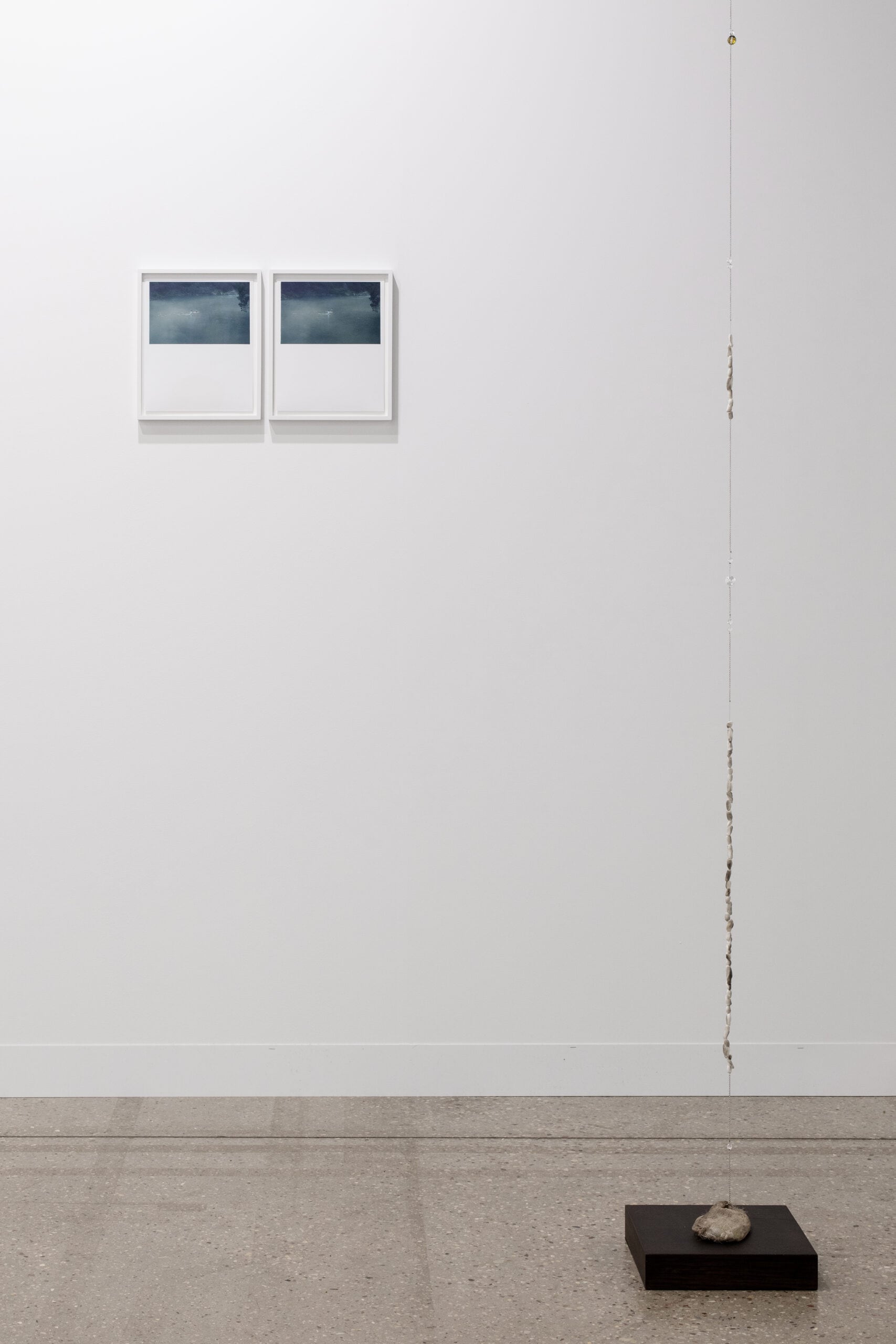
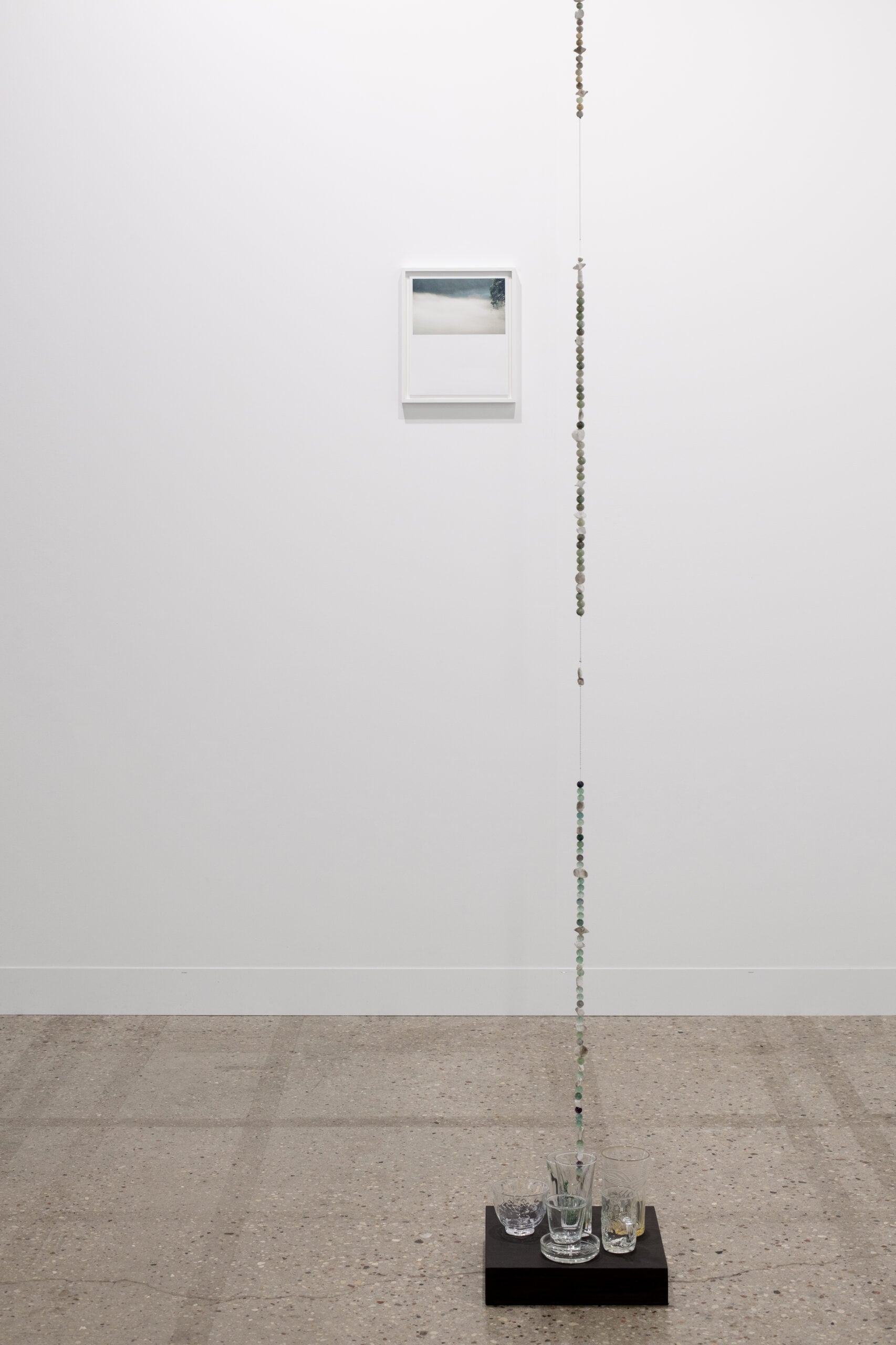
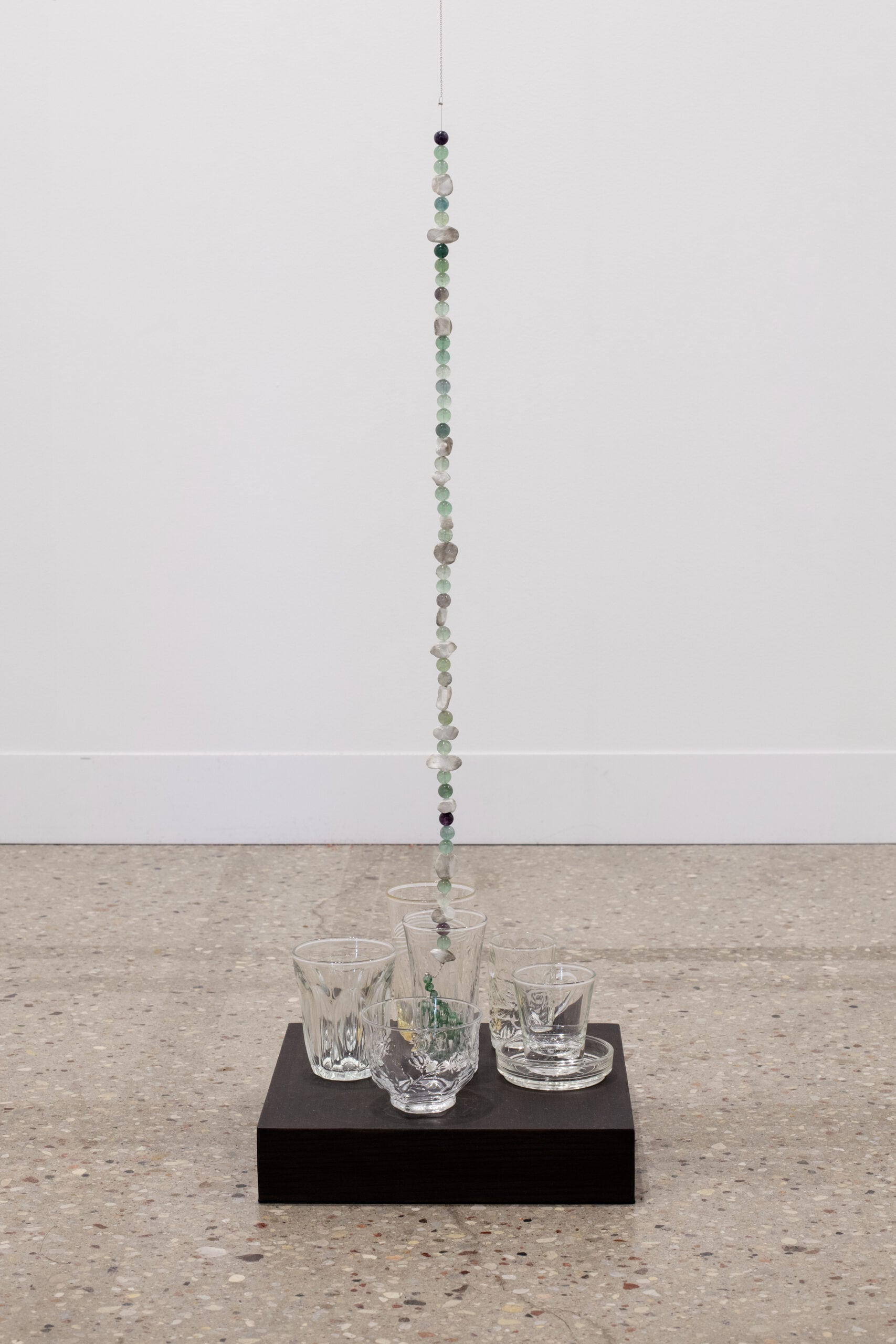
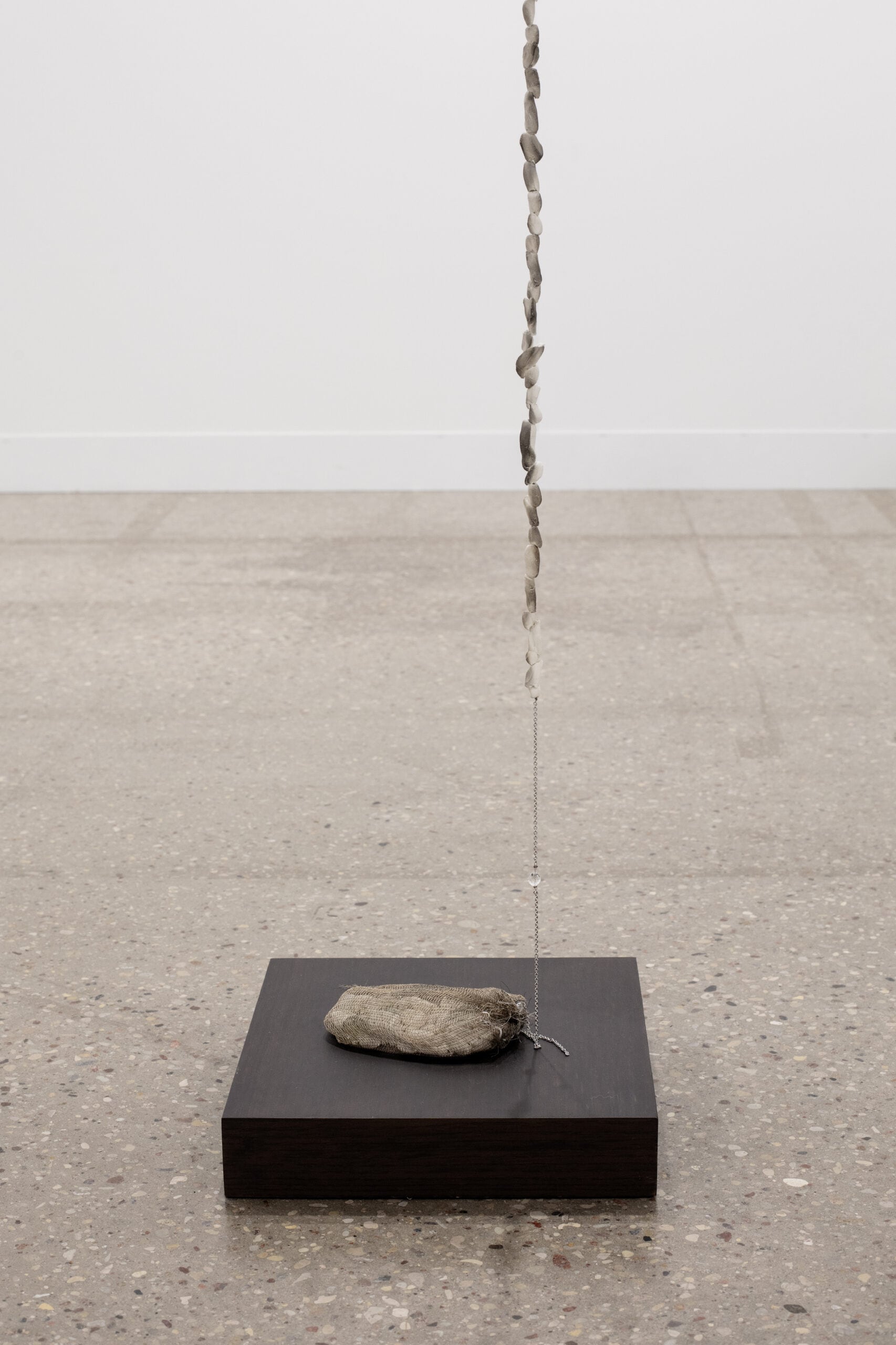
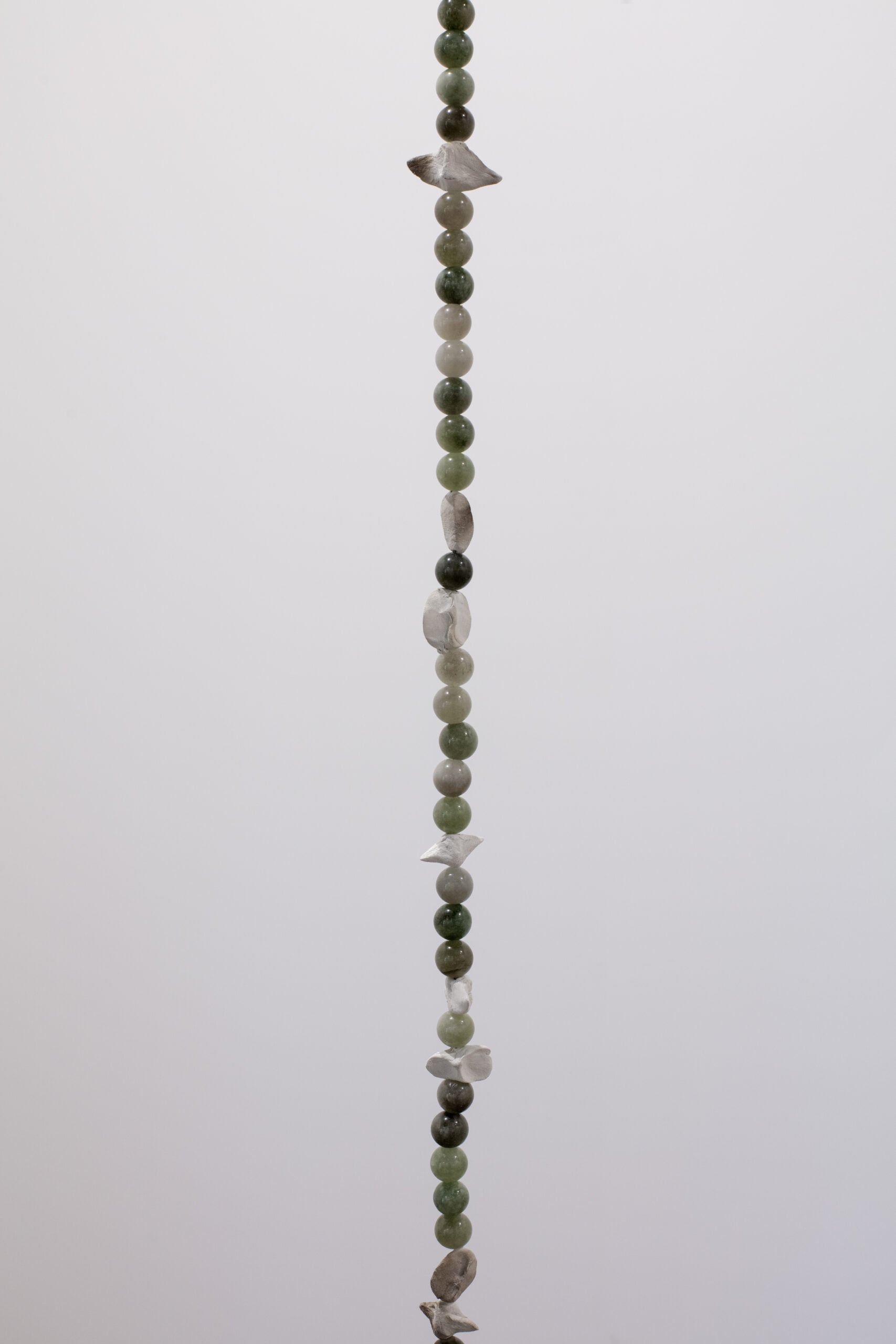
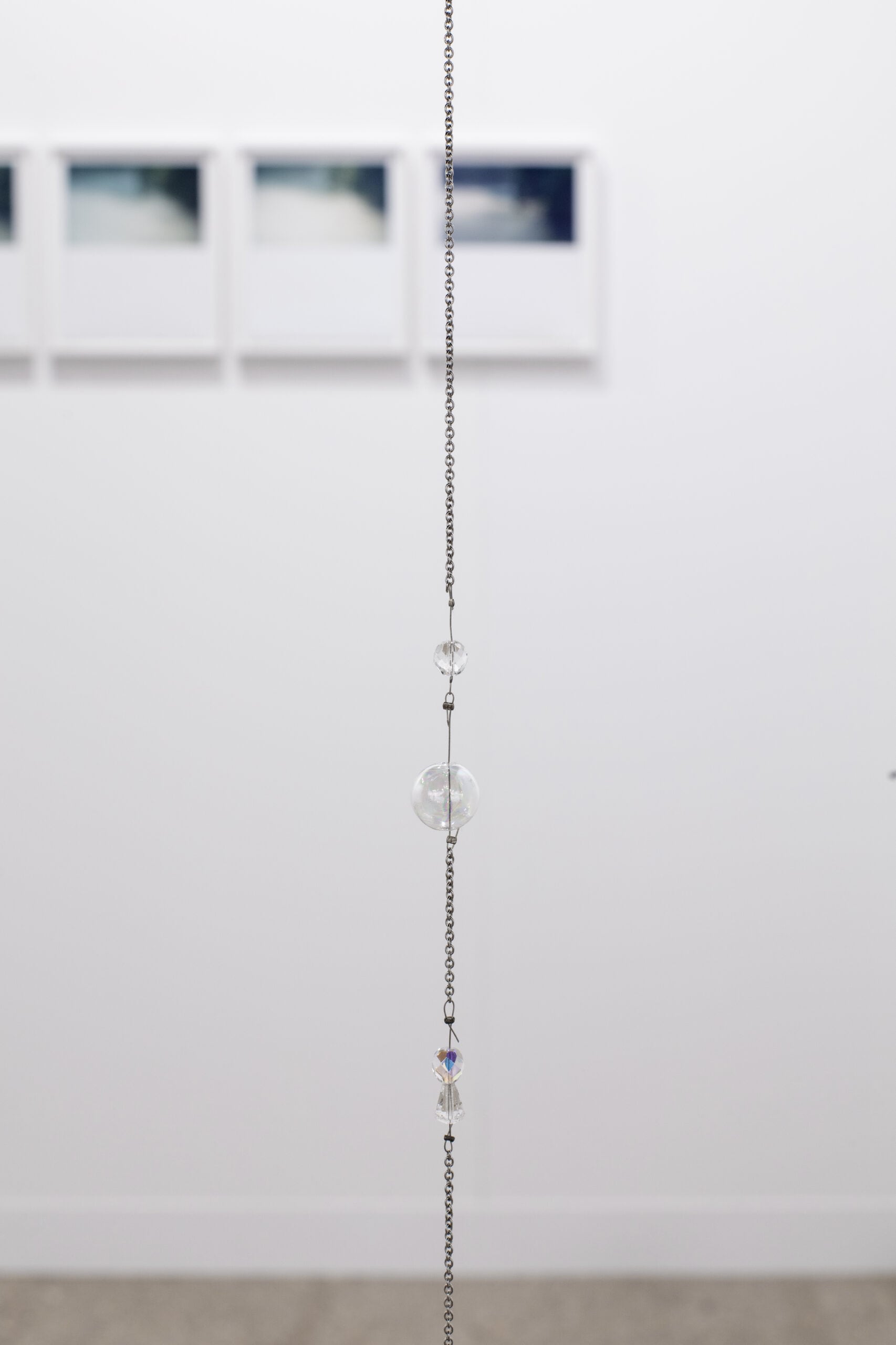
In Descendant (spine x/bag of bones) (2024) and Descendant (spine x/charms) (2024) by Pam Virada, lines of beads hang from the ceiling and reach the ground — spinal cords, necklaces, or lingering presences (that spider web that your skin remembers long after you’ve walked into it). But that’s also like memory — certain things are embedded, caught in the net of time, until an opportunity comes to pull them out, one by one, spark by spark. That’s an ancestor, an echo.
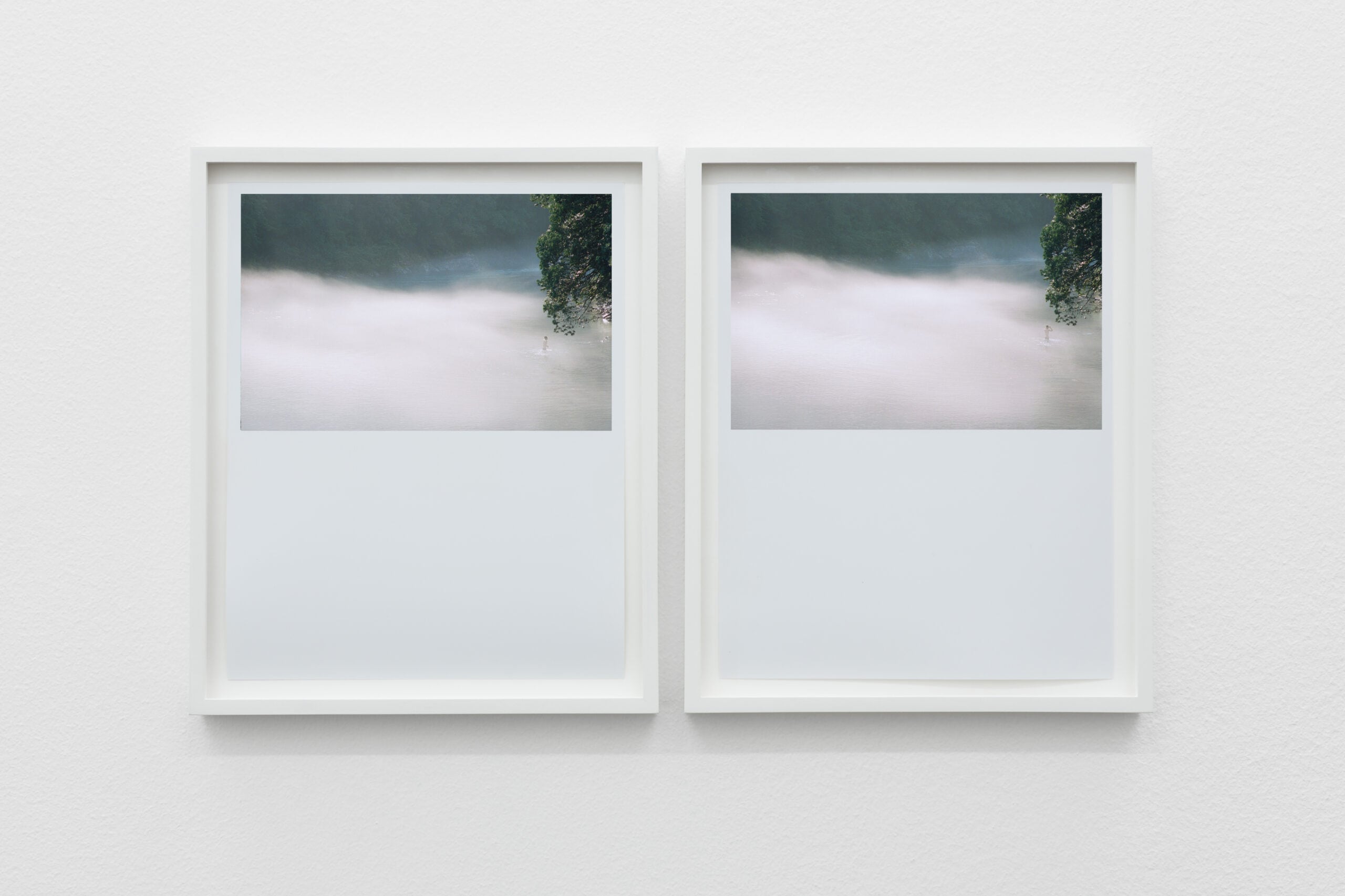
Whereas, the images of Tales (Itadori River, Seki, Gifu-ken, Japan, July 2019), 2020 by Daniel Gustav Cramer, show a group of boys playing together in a river near their village in the Japanese mountains. The stories that lie ahead of them, the quiet decisions already taking shape — memory can also operate in the future. Without noticing, they are inscribing themselves into the river and the landscape — and the river and the landscape are inscribing themselves back onto the boys.
They might feel a pull to return home, to this bend in the river, to this shimmering place of childhood. It is no wonder that our son loves those fish, those past lives found in the horizontality of movement, of future memory, and the call to float, float, float together in time.
ABOUT THE ARTISTS
Pam Virada navigates the cinematic and the temporal in domestic spheres, through attunements in the atmosphere and expanded cinema. Represented by Nova Contemporary, Bangkok.
Daniel Gustav Cramer’s exhibitions often consist of an installation of individual elements that together unfold as one single body. Represented by SpazioA, Pistoia; Sies + Höke, Düsseldorf; and Vera Cortes, Lisboa.
ARTWORK LIST
Pam Virada
Descendant (spine x/bag of bones)
2024, chains, clay, glass, beads, marbles, fabric, wood, dimensions variable
Descendant (spine x/charms)
2024, chains, clay, jade, stone, found glasses on wood, dimensions variable
Daniel Gustav Cramer
Tales (Itadori River, Seki, Gifu-ken, Japan, July 2019), 2020
21 framed C-prints in 6 groups
Each frame 27.5 x 22.5 cm
Edition of 5 + 2 AP